
Research
-
Researchers at the University of Georgia found that pathogens, like salmonella, can survive for at least six months in cookies and crackers. The recent study was prompted by an increased number of outbreaks of foodborne diseases linked to low-water-activity, or dry, foods. Larry Beuchat (pictured left), a Distinguished Professor Emeritus and researcher in the UGA College…
-
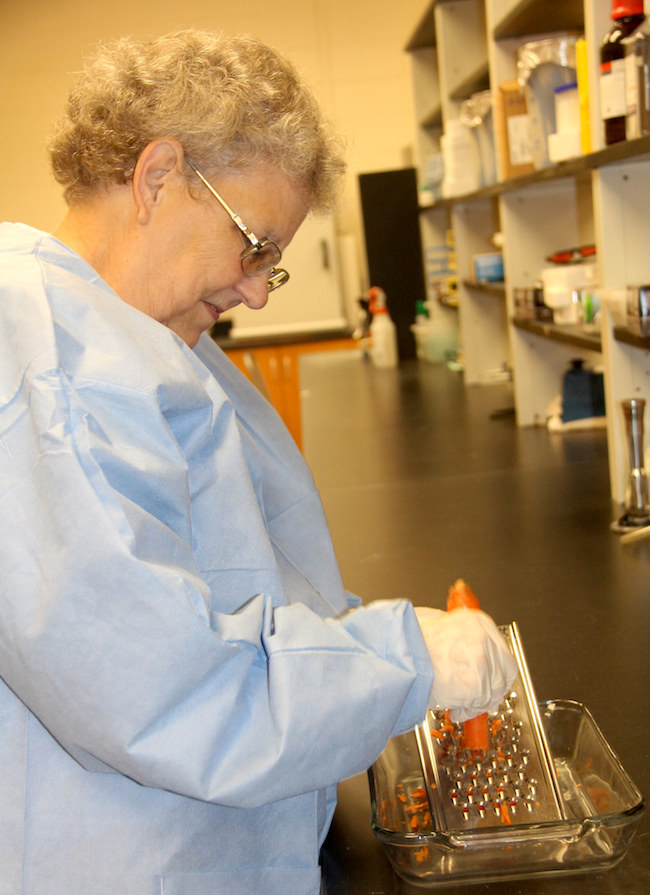
In a recent study funded by the U.S. Food and Drug Administration, University of Georgia researchers found that produce containing bacteria are likely to contaminate other produce items through the continued use of knives or graters — the bacteria latches onto the utensils commonly found in consumers’ homes and spreads to the next item. Unfortunately,…
-

A University of Georgia food scientist is turning to a logical source for input on which foods consumers like and which they don’t like. His research involves recruiting people from all walks of life to come into his laboratory in Griffin, Georgia, and taste food. Since joining the UGA College of Agricultural and Environmental Sciences…
-

Maxwell Lamptey is visiting America, specifically Griffin, Georgia, in the hopes of learning new methods to fight aflatoxin — a carcinogen produced by soil fungus that can grow on peanuts — in his home country of Ghana. Lamptey is participating in a short-term training program, from March to September, supported by the Peanut and Mycotoxin…
-

Summertime is synonymous with cooking outdoors, taking a dip in the pool and cranking up the lawn mower to begin the arduous task of caring for your home lawn. University of Georgia Cooperative Extension has made the task a little easier through a few mobile apps for Georgia homeowners and green industry professionals alike. “More…
-

Georgia House Resolution 744 created a committee to study the use of unmanned aerial vehicles, or drones, in the state. Created as a result of public concern, the committee will look at the uses of these remote-controlled, airplane-like devices, equipped with cameras and used by law enforcement agencies and other government authorities, to determine whether…
-

In addition to building and maintaining roads, the Georgia Department of Transportation (DOT) mows grass and kills weeds that obstruct drivers’ views. A University of Georgia scientist has created an app to help DOT agronomists kill weeds quicker, using less chemicals. Patrick McCullough, a weed scientist with the UGA College of Agricultural and Environmental Sciences,…
-

A neat, long pile of soil anchored with red handled shovels standing at attention waited under blue skies and perfect fall temperatures as a crowd gathered to witness the long awaited groundbreaking for the UGA Griffin Food Technology Center on Friday, October 17th. The event was more a celebration of the culmination of local, university…
-

Backyard squash growers may not agree on which variety is best, but they do agree on one thing – squash vine borers are the enemy. The small larvae burrow through squash plant stems, wilting and eventually killing what appear to be lush, healthy plants. Since they are hidden inside the plant, most home gardeners have…
-

Bob Westerfield spends his days growing vegetables and watching for problems. As University of Georgia Extension’s consumer vegetable horticulturist, he answers questions from backyard gardeners and Extension agents across the state. In the summer months, most of the questions are about tomatoes. “I’d say 90 out of 100 vegetable calls I get in the summer…